
AGM Battery Lifespan: How Long Do AGM Batteries Last? (With Real Data)
How long do AGM batteries last? 5-12 years in standby, 500-1,200 cycles in cycling applications. Factory test data, temperature derating charts, and tips to maximize AGM battery life.
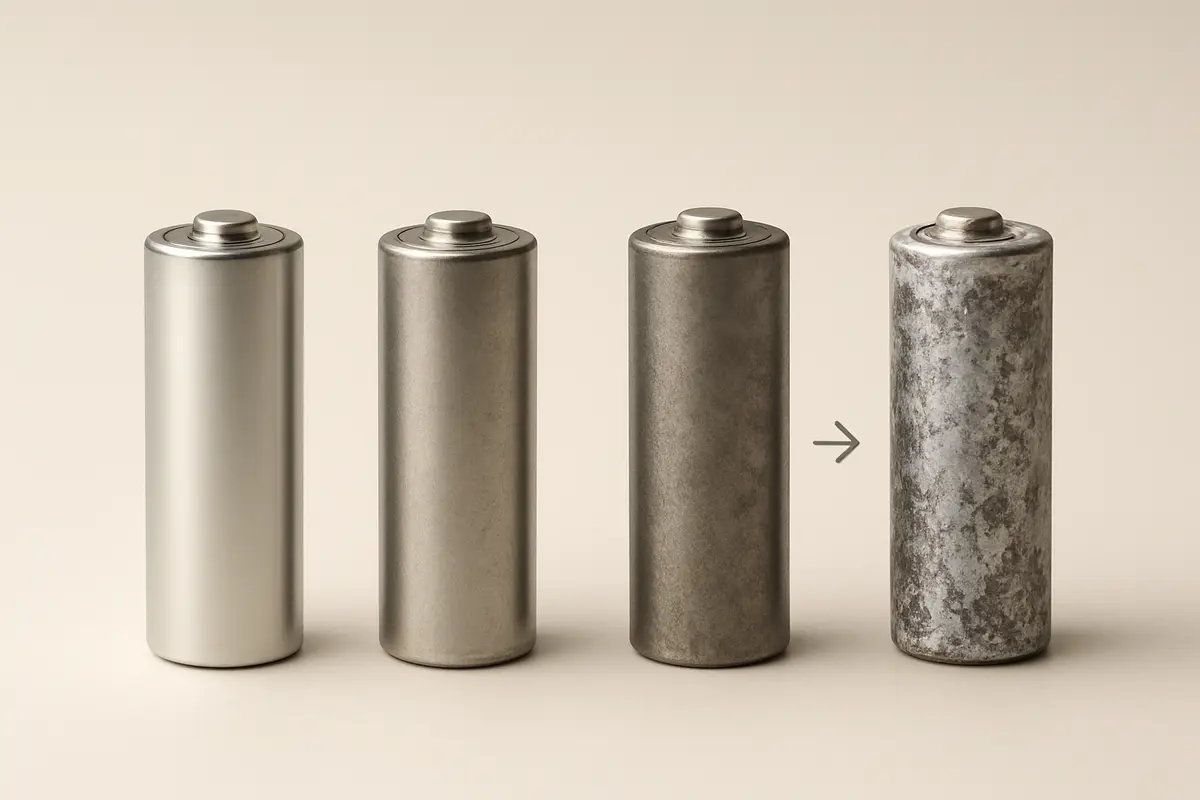
Quick Answer: AGM Battery Lifespan
Standby/float applications (UPS, telecom): 5-12 years at 25°C, depending on battery design quality Cycling applications (solar, daily use): 500-1,200 cycles at 50% depth of discharge (DOD) Calendar life (regardless of use): Maximum 15 years before internal corrosion renders the battery unusable
The single biggest factor affecting AGM battery lifespan is **operating temperature**. Every 8-10°C above 25°C approximately halves the expected life — a battery rated for 10 years at 25°C will last only 5 years at 33-35°C.
Standby Life vs Cycle Life — Two Different Measures
AGM battery lifespan is measured in two ways, and understanding the difference is critical for choosing the right battery:
Standby (Float) Life
This is how long the battery lasts when continuously connected to a charger at the correct float voltage (13.5-13.8V for 12V AGM), ready to deliver power when needed but rarely actually discharged. This is the typical UPS and telecom scenario.Cycle Life
This measures how many charge-discharge cycles the battery can deliver before capacity drops to 80% of its original rating. Cycle life depends heavily on depth of discharge (DOD):Key takeaway: Shallower discharges dramatically extend cycle life. A battery used at 30% DOD will last 3-4× longer than one used at 80% DOD.
What Kills AGM Batteries: The 5 Enemies
1. Heat (The #1 Killer)
The relationship between temperature and battery life follows the Arrhenius equation. In practical terms:
Real example: A Naradex ND12-100 has a 10-year design life at 25°C. In a non-air-conditioned battery cabinet averaging 35°C, that battery will last approximately 4 years.
2. Overcharging
Float voltage above 13.8V (2.30 V/cell) for extended periods accelerates positive grid corrosion and electrolyte dry-out. Just 0.15V too high (13.95V instead of 13.80V) can reduce battery life by 25-40%.
3. Undercharging
Float voltage below 13.2V (2.20 V/cell) causes chronic sulfation — hard lead sulfate crystals build up on the plates and become non-reactive. Sulfation is the most common cause of premature capacity loss.
4. Deep Discharge Without Prompt Recharging
Leaving an AGM battery below 10.5V (1.75 V/cell) for more than 48 hours causes irreversible sulfation. The longer the battery sits discharged, the more capacity is permanently lost.
5. Vibration and Physical Abuse
While AGM batteries resist vibration better than flooded batteries (the compressed glass mat holds plates firmly), sustained heavy vibration can crack plate grids and break internal welds, causing sudden failure.
How to Maximize AGM Battery Life
Temperature Control
- Install batteries in air-conditioned rooms (20-25°C ideal) - If air conditioning is not available, ensure adequate ventilation - Never install batteries near heat sources (UPS transformers, server exhaust) - Monitor battery room temperature with a simple data loggerCorrect Charging
- Verify float voltage is 13.5-13.8V (2.25-2.30 V/cell) for 12V batteries - Enable temperature compensation on UPS/charger (-3 mV/°C/cell) - Never apply equalization charge to AGM batteriesRegular Testing
- Quarterly: Visual inspection for swelling, leakage, corrosion - Semi-annually: Impedance/conductance testing (Midtronics, Megger, or equivalent) - Annually: Controlled discharge test to verify actual runtime - Record all test results to track degradation trendsTimely Replacement
- Replace at 80% of design life, not at failure - Replace entire strings, never individual batteries - Keep spare batteries if lead time is a concern (AGM batteries have 1-3% monthly self-discharge, so they store well)Naradex AGM Battery Life Specifications
Related Resources
- [How to Charge AGM Batteries](/blog/how-to-charge-agm-battery-voltage-guide/) — Correct charging preserves battery life - [VRLA Battery Maintenance Guide](/blog/vrla-battery-maintenance-guide/) — Complete maintenance program - [UPS Battery Replacement Guide](/blog/ups-battery-replacement-step-by-step-guide/) — When and how to replace - [Our AGM Battery Products](/products/12v-agm-battery/) — View specifications and datasheets